Fireplaces are one of the few home features where Los Angeles regulates more tightly than most of the country, and where the local constraints surprise people. Three things shape what is possible here, and none of them is climate: regional air quality rules, earthquake risk to masonry chimneys, and wildfire hazard zoning.
Understanding those three before choosing a fireplace or fire feature saves a great deal of expense, because each of them can rule out an option entirely rather than merely complicate it.
Air Quality Rules Restrict Wood Burning
The South Coast Air Quality Management District regulates wood burning across the air basin covering most of Los Angeles County, and its rules have reshaped the market.
The most consequential provision restricts the installation of wood-burning fireplaces in new residential development. For new construction, permanently installed wood-burning hearths are generally not an option, and gas or other approved appliances are fitted instead. This is why almost every fireplace in recently built housing across the region burns gas.
The second provision affects everyone, new build or not. During the winter months, the district forecasts fine particulate levels daily and declares mandatory no-burn days when pollution is expected to be high. On those days, burning wood is prohibited in fireplaces and outdoor wood-burning devices alike, with limited exemptions for households where wood is the sole heat source or where natural gas service is unavailable. Because no-burn days cluster on cold, still evenings, they tend to fall precisely when people most want a fire.
The practical consequence is that a wood-burning fireplace in Los Angeles is usable on fewer winter evenings than owners expect, and that reality is worth weighing before investing in one or restoring one. Rules are periodically revised, so current requirements and exemptions should be confirmed with the air district directly.
Masonry Chimneys and Earthquakes
This is the local issue most often ignored until it becomes urgent. Unreinforced masonry chimneys are among the most consistently damaged building elements in Southern California earthquakes. The portion projecting above the roofline is heavy, brittle, poorly tied to the structure, and unsupported, which is close to a worst case arrangement under lateral shaking.
Homes built before mid century across much of the Westside and the older Valley neighbourhoods frequently have exactly this construction. Damage in past events has ranged from cracked mortar to chimneys separating from the house and falling through roofs, and a chimney that came through a previous earthquake with visible cracking is more vulnerable in the next one, not less.
Several remedies exist. Bracing and retrofitting can tie the stack more effectively into the structure. Reducing the chimney above the roofline lowers both mass and leverage. Where a fireplace is being modernised anyway, replacing a masonry stack with a metal flue inside a lightweight enclosure removes the hazard entirely while preserving appearance.
An older brick chimney that has never been assessed is worth inspecting on its own merits, independent of whether the fireplace is used. Diagonal cracks in the stack, gaps where the chimney meets the wall, loose or missing mortar, and any visible lean all warrant attention.
Choosing a Fuel
Wood delivers the experience people picture, and carries the restrictions described above along with the maintenance obligations described below.
Natural gas dominates for good reasons, but the category contains meaningfully different products. Decorative log sets in an existing open fireplace produce flame with very little useful heat and rely on the existing chimney. Direct-vent sealed units draw combustion air from outside and exhaust through a sealed pipe, which is the modern standard for both efficiency and indoor air quality. Vent-free appliances exist but face restrictions in California and warrant careful scrutiny.
Propane serves outdoor features where extending a gas line is impractical, at the cost of tank handling and storage.
Electric units need no venting, produce modest heat, and install almost anywhere. For ambience in a room that already has heating, they are a reasonable answer.
Ethanol burners require no flue, which is precisely why they need caution. Combustion products enter the room directly, so ventilation and manufacturer limits matter, and they suit occasional decorative use rather than regular heating.
Maintaining a Working Fireplace
Wood burning produces creosote, a combustible residue that accumulates on flue walls and is the fuel for chimney fires. It builds faster with unseasoned wood, slow smouldering fires, and restricted air supply, and it progresses from a light flaky deposit through to a hardened glaze that is difficult to remove. Regular inspection and sweeping is the entire preventive strategy, and frequency depends on how much the fireplace is actually used rather than on a fixed calendar.
Several components deserve periodic attention regardless of fuel. The spark arrestor keeps embers from leaving the flue and is required on chimneys in California wildland fire areas. The chimney cap keeps rain and animals out. Flashing at the roof junction is a common leak point, and Los Angeles rain arriving as short intense bursts finds those failures efficiently. The damper should seal properly, since an open damper on an unused fireplace is a permanent hole in the building envelope.
Gas appliances need servicing too. Burners, pilot assemblies, thermocouples, and venting all degrade, and sealed direct-vent units depend on intact seals and unobstructed terminations. Carbon monoxide detection is essential in any home with fuel-burning appliances and is required by California law in dwellings with them.
Outdoor Fireplaces and Fire Pits
Outdoor fire features follow different rules but not looser ones. No-burn day restrictions apply to outdoor wood burning as well as indoor, so a wood-burning outdoor fireplace inherits the same winter limitations.
Clearance governs placement. Fire features need separation from combustible walls, fences, and eaves, and adequate space overhead. A fire pit beneath a low tree canopy or tight against a timber fence is a hazard regardless of how well it is built. Under a solid patio cover the situation is more restrictive still, and manufacturer clearances and local requirements both apply.
Built-in gas fire pits use a burner and pan assembly beneath a media layer, and only rated products belong in one. Ordinary landscape stone can retain moisture and fracture explosively when heated, which is why lava rock and tempered fire glass specifically manufactured for the purpose are used instead. An enclosure containing gas needs correct ventilation so unburned gas cannot accumulate.
Where a fire feature and an outdoor kitchen are both planned, the gas load should be sized together, since running a second line later means opening finished paving.
Wildfire Zones
Properties within the Very High Fire Hazard Severity Zones covering much of the Santa Monica Mountains, the Hollywood Hills, Calabasas, Topanga, and the foothills above Chatsworth, Porter Ranch, and Sunland face additional constraints on open flame.
Outdoor wood burning is restricted or prohibited outright in many of these areas, and enforcement tightens during declared fire weather. Spark arrestors on chimneys are required. Defensible space obligations govern vegetation clearance around structures, and the ember-resistant zone requirements applying immediately around buildings affect what may be built and stored close to the house, including combustible fire feature surrounds.
Santa Ana conditions deserve particular respect. Hot, dry, fast winds from the northeast are exactly the circumstances in which an ember travels, and open flame during those events is worth avoiding entirely regardless of what regulations technically permit. Requirements vary by jurisdiction and change, so the local fire authority governs any specific parcel.
Permits
Gas piping and electrical work require permits and inspection. Structural work on a chimney does. Installing a new fireplace appliance generally does. An outdoor masonry fireplace is a structure with a footing and typically needs permitting in its own right, and one built beneath or attached to a patio cover engages that structure as well.
Portable and freestanding units are usually outside this framework, which is part of their appeal for renters and for anyone testing whether they will actually use a fire feature before committing to a built one.
Placing It Well
A fire feature works as an anchor for seating, and the most common design mistake is positioning it without regard to smoke. On the Westside, afternoon and evening breezes typically arrive from the west and southwest, which determines where smoke will travel across a seating area. Building a wood-burning feature upwind of the dining space is not correctable afterwards. Gas features avoid the problem almost entirely, which is one of the quieter arguments in their favour.
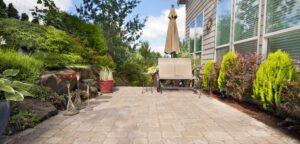
Scale matters as well. A large masonry outdoor fireplace dominates a small yard and can block light and views, while a low fire pit keeps sightlines open and seats more people around it. A paver patio with a fireplace is a common arrangement precisely because the hardscape and the feature can be detailed together.
What Drives the Cost
- Fuel and venting. An electric unit needs a circuit. A direct-vent gas appliance needs a vent route through the structure. A masonry fireplace needs a foundation and a flue.
- Gas supply. Distance from the meter and whether existing capacity supports the added load, which matters most when a fire feature and outdoor kitchen are added together.
- Chimney work. Retrofitting or rebuilding a masonry stack is structural work with access and safety costs attached.
- Materials. Stone and tile surrounds, mantels, and custom metalwork sit on top of the functional cost.
- Site access, which governs how masonry reaches a hillside or narrow Westside lot.
Choosing Sensibly
For most Los Angeles households the honest recommendation is gas, for reasons that have little to do with preference. It sidesteps no-burn day restrictions, produces no creosote, requires no sweeping, and eliminates ember risk in fire-prone areas. Wood remains attractive to people who genuinely want the ritual and accept the maintenance and the restricted usable evenings.
For older homes, the chimney deserves assessment before anything else. There is little sense investing in a fireplace upgrade beneath an unreinforced masonry stack that presents a seismic hazard, and addressing both together is more efficient than discovering the second problem after finishing the first.
Outdoor features integrate best when planned alongside surrounding hardscape and structures, as covered in patio and deck design for Los Angeles homes and paver installation in Los Angeles.
For project types and services, see fireplaces and fire features and backyard remodels.