San Fernando Valley · Outdoor Design-Build
Landscape Design & Outdoor Construction in the San Fernando Valley
Shade structures, pools, hardscape, and hillside engineering across the Valley — built for heat, clay soil, and the fire-zone margins.
Have Questions?
Want To Schedule Your Free Estimate?
🔒 We Will Never Sell Your Info
One Valley, Many Rulebooks
What Building in the Valley Actually Involves
The San Fernando Valley is roughly 260 square miles of mostly flat ground ringed by mountains on every side, and it behaves as a single climate while being governed by several different authorities. Most of it — Van Nuys, Sherman Oaks, Encino, Studio City, Reseda, Northridge, Woodland Hills, Tarzana, North Hollywood, Chatsworth, Granada Hills, Sylmar — sits inside the City of Los Angeles and permits through LADBS. Burbank, Glendale, San Fernando, Calabasas, and Hidden Hills are separate cities with their own departments, standards, and timelines, and there are unincorporated County pockets between them.
That matters more than most homeowners expect. Two neighbours a mile apart can face different permit paths, different review thresholds, and different fire-zone requirements for the same patio. Line of Art Construction builds across all of it, and the first thing we establish on any project is which authority actually governs the parcel.
Heat Is the Defining Constraint
The Valley Is Not the Westside, and It Should Not Be Designed Like It
The mountains that enclose the Valley also trap heat in it. Summer afternoons here run well above what the coastal side of the county sees, with low humidity and intense direct sun, and the ground holds that heat into the evening. A west-facing backyard with no shade is simply not used from June through September, however well it is built.
Three decisions determine whether a Valley outdoor space gets used or just gets looked at:
Overhead
Shade Before Anything Else
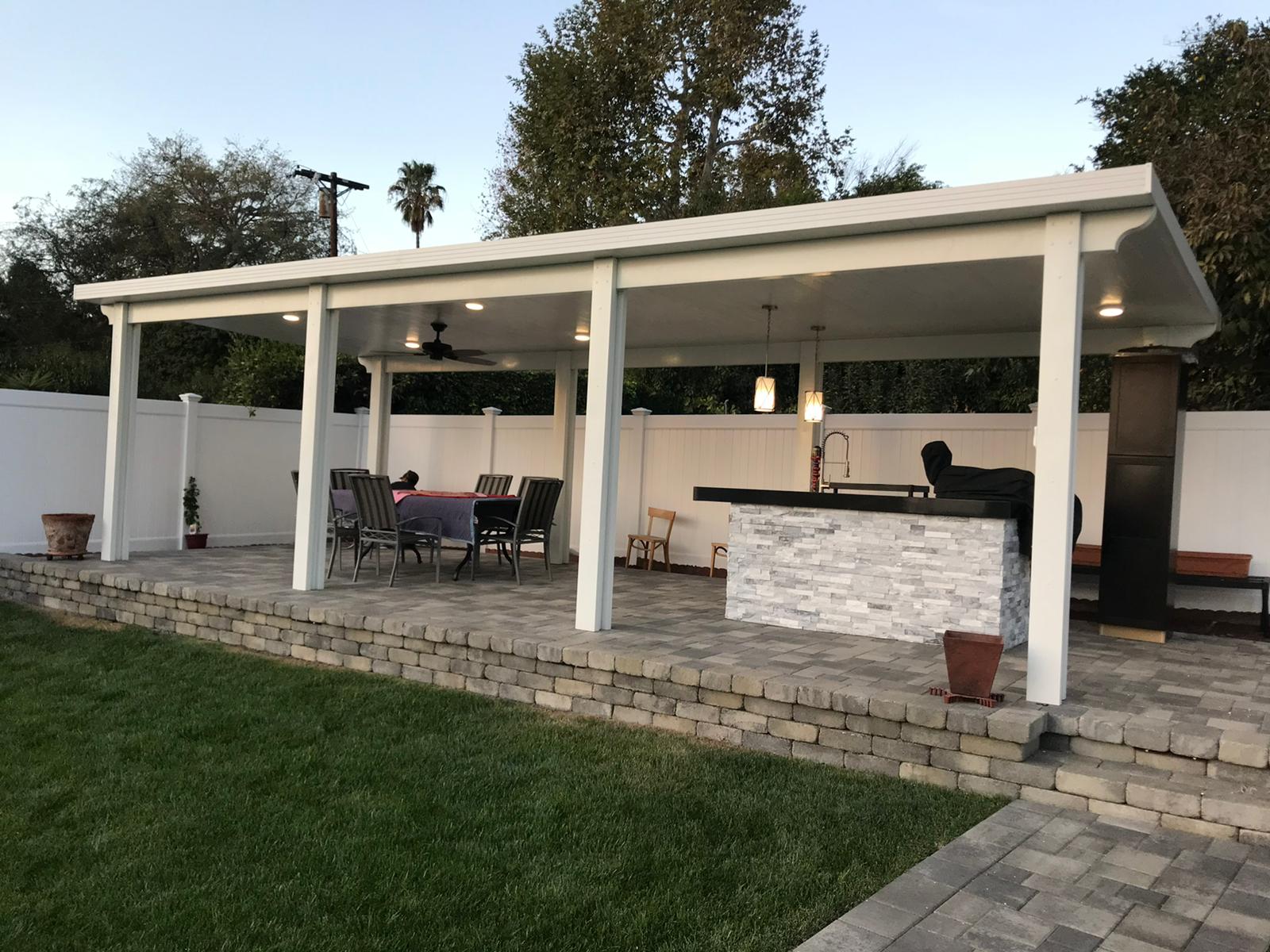
A solid or louvred patio cover, a pergola, or a well-placed tree changes the usable hours of a Valley yard more than any material upgrade. Louvred systems let you keep low winter sun while excluding high summer sun, which inland is the right trade. This is consistently the highest-return thing you can build here.
Underfoot
Surface Temperature
Dark concrete, dense stone, and dark composite decking absorb and re-radiate heat, and synthetic turf runs hotter still. Lighter paver tones, travertine, and cooling infills stay usable barefoot. Around a pool this stops being aesthetic and decides whether the deck is occupiable in August.
Planting & Water
Species That Survive the Summer
Outdoor watering across the region runs under day-of-week limits set by each water retailer, and the Valley feels that harder than the coast because evaporation is higher. Climate-appropriate planting and efficient irrigation keep a garden handsome without an unmanageable running cost.
Get shade, surface, and planting right and a Valley property is usable most of the year rather than a third of it.
The Hillside Margins
Flat Floor, Steep Edges, and the Fire-Zone Band
The Valley floor is easy ground. The edges are not. The Santa Monica Mountains rise along the south through the Encino, Sherman Oaks, and Studio City hills; the Verdugos close the east; the Santa Susanas and the Angeles National Forest front the north above Chatsworth, Granada Hills, and Sylmar; and the west end climbs toward Calabasas and Hidden Hills. Much of that perimeter sits in a Very High Fire Hazard Severity Zone.
On those margins a project becomes a grading, retaining, and drainage problem before it becomes a design problem. Many of these streets were cut decades ago with fill that is poorly documented by current standards, so geotechnical investigation is routine rather than optional. We build engineered retaining wall systems with drainage designed first — aggregate backfill, perforated collector, filter fabric, and a deliberate outlet — and detail defensible space so the landscape reads as designed rather than cleared. On the flat floor, the same budget buys shade, pool, and terrace instead.
Get Your Free EstimateWorking Across the Valley
Three Things We Establish First
The Valley rewards knowing which rules apply before anything is drawn.
Which Authority Governs the Parcel
City of Los Angeles through LADBS, or Burbank, Glendale, San Fernando, Calabasas, or Hidden Hills, or unincorporated County. Each has its own thresholds for retaining wall height, grading volume, and what triggers review. We confirm this for the specific address rather than assuming.
Fire Zone Status
Whether the parcel falls in a Very High Fire Hazard Severity Zone changes permitted materials for structures and decking, and engages defensible space and ember-resistant zone requirements around the house. Requirements have been evolving, so we verify current rules with the local fire authority.
Utilities Before Hardscape
Gas, water, and conduit for lighting or an outdoor kitchen go in before paving. Trenching them into a finished patio afterwards is the most avoidable cost on any Valley project, flat or sloped.
What We Build
Services Across the San Fernando Valley
We handle the landscape, hardscape, structures, and water that surround a home as one accountable scope. On a flat Valley lot that means shade and surface. On the hillside margins it means engineering first.
Pools and Spas
New construction and remodels. Deck width and surface temperature matter more here than almost anywhere, and on sloped lots the pool is a structural problem before it is a water one.
Hardscape and Outdoor Kitchens
Paver, porcelain, and stone terraces, plus outdoor kitchens with outdoor-rated appliances and countertop material that survives inland UV. Engineered quartz is never specified outdoors.
Backyard remodeling in Los Angeles →Patio Covers and Pergolas
The highest-return structure on a Valley property, and the single thing most likely to turn an unused yard into a used one.
Driveways and Arrival
Paver and concrete driveways. Flat-lot work is base depth and edge restraint; hillside approaches need grade transition and drainage engineering.
Driveway installation →Retaining Walls and Drainage
Engineered walls and terracing along the hillside margins, with drainage designed before the wall rather than added to it.
Turf and Water-Wise Planting
Specified for inland exposure, where surface heat and UV behave nothing like they do on the coast.
Get Your Free EstimateFree Consultation + Free 3D Design
See Your New Outdoor Space Before It’s Built
We begin every project with a free consultation and a free 3D design, so you can see your future landscape rendered in detail before committing to anything.
On a Valley property the 3D step answers the questions that decide the project: where the shade actually falls through the afternoon, and how much usable space is left once the pool, the cover, and the seating are placed.
Get Your Free Estimate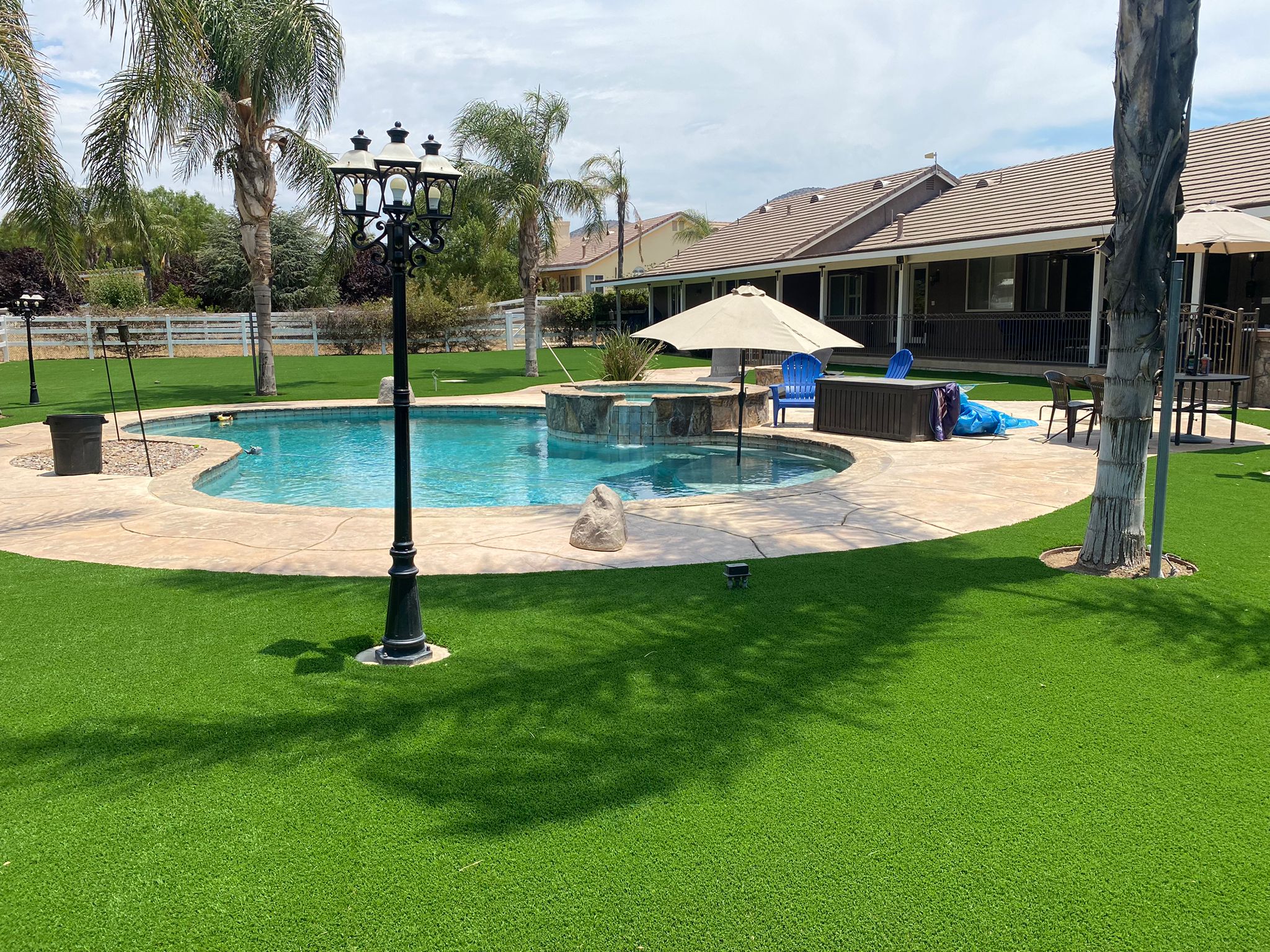
The Long View
The Long View
A Valley property built for the heat, drained for the storms, and detailed for its fire-zone status if it has one gets used most of the year and holds up for decades. That is worth doing once and doing correctly.
Line of Art Construction would be honored to be part of that work, building outdoor spaces that celebrate this extraordinary stretch of coastline while respecting what it has taught everyone about resilience.
Service Area
Valley Communities We Build In
We work throughout the San Fernando Valley and its edges, from the City of Los Angeles neighbourhoods on the valley floor to the separately governed cities around its rim. Each community below has its own page covering the conditions specific to it — soil, slope, fire-zone status, and the authority that permits the work.
Line of Art Construction
Main office
6463 Mammoth Ave, Unit A
Van Nuys, CA 91401
(818) 232-1964San Fernando Valley Landscaping FAQ
Questions Valley Homeowners Ask Us
What is the single best thing to add to a Valley backyard?
Shade. A patio cover, pergola, or well-placed tree changes the number of usable hours more than any surface or planting choice, because the limiting factor here is afternoon heat rather than space or style.
Who permits my project — the City of Los Angeles or my own city?
It depends on the parcel. Van Nuys, Sherman Oaks, Encino, Studio City, Reseda, Northridge, Woodland Hills, Tarzana, Chatsworth, Granada Hills and most of the Valley floor are City of Los Angeles and permit through LADBS. Burbank, Glendale, San Fernando, Calabasas and Hidden Hills are separate cities with their own departments, and there are unincorporated County pockets. We confirm which applies to your address before any design work.
Is my property in a fire hazard zone?
Much of the Valley perimeter is. The Santa Monica Mountains along the south, the Verdugos to the east, the Santa Susanas and forest boundary to the north, and the western hills toward Calabasas all carry Very High Fire Hazard Severity Zone designations. That changes permitted materials for structures and decking and engages defensible space requirements. The flat floor generally does not. We verify status with the local fire authority for the specific parcel.
Can you work alongside my architect or general contractor?
Yes. We coordinate with your architect and general contractor so outdoor construction sequences correctly with the house: driveway and flatwork after heavy equipment is done, planting and finish work last.
Do you handle permits across the Valley?
Yes. Retaining walls above the exempt height, grading past defined thresholds, drainage work, pools, and any gas or electrical work are permitted and inspected wherever you are in the Valley. The thresholds and the department differ by jurisdiction, and we coordinate that scope and confirm current requirements for your parcel.
Is the consultation and 3D design free?
Yes. Every project begins with a free consultation and a free 3D design, so you can see your future landscape rendered in detail before committing to anything.
Designing · Building · Rethinking
Let’s Build Something That Survives the Summer
Wherever you are in the Valley, contact us for a free consultation and a free 3D design.