Most landscaping advice about home value is written for a national audience and translates poorly here. Los Angeles buyers weigh outdoor space differently, water carries a cost and a regulatory context that it does not elsewhere, and in a growing share of the county insurance considerations now sit alongside aesthetics. What raises value in Ohio is not automatically what raises it in Sherman Oaks.
What follows is organised around that difference, and around a distinction worth keeping in mind throughout: some improvements return value at sale, some reduce running costs, and some simply make a property easier to insure or to occupy. They are not the same thing, and the most defensible projects usually do more than one.
Usable Outdoor Living Space
This is the strongest single category in Southern California, and the reason is climate. An outdoor room here is usable most of the year rather than for three or four months, so it functions as an extension of the house rather than as seasonal decoration. Buyers evaluate it accordingly.
The distinction that matters is between decorated and genuinely usable. A paved area with nowhere comfortable to sit, no shade, and no lighting is landscaping. A defined space with a durable surface, shelter, and a reason to be there is additional living area. The second reads as square footage and the first does not.
Durable surfaces matter to that perception. Unit paving flexes with the seasonal soil movement common across the county and can be lifted and reset, where a cracked concrete slab reads as deferred maintenance to anyone walking through. The material and base considerations are covered in paver installation in Los Angeles, and the patio versus deck decision, which is largely determined by slope, in patio and deck design for Los Angeles homes.
Shade, Which Inland Buyers Notice Immediately
Shade is the most undervalued improvement in the San Fernando Valley and the most commonly omitted. A west-facing yard in Woodland Hills, Northridge, or Chatsworth receives direct afternoon sun through the hottest part of the day, and without shelter the space is simply not used from June to September.
A solid or louvred patio cover or pergola converts an unusable area into a usable one, which is a larger practical gain than most decorative improvements deliver. Mature shade trees achieve the same thing and take years, which is precisely why existing ones carry value.
Nearer the coast this matters less. Under the marine layer, in Santa Monica, Mar Vista, Venice, and Culver City, sun exposure is rarely the constraint and shade competes with the desire for light.
Water-Wise Planting
Southern California buyers have absorbed the reality of water cost and watering restrictions, and a thirsty lawn now reads to many of them as a running expense rather than an amenity. Climate-appropriate planting, whether California natives or other low-water species, signals lower ongoing cost and tends to look more settled in this landscape than imported temperate planting does.
The practical caution is that low-water is not no-maintenance, and a neglected drought-tolerant garden looks considerably worse than a neglected lawn. Design quality matters more, not less, when planting is sparse.
Regional turf replacement rebate programmes have been available through water agencies, generally requiring approval before existing grass is removed and often favouring living low-water landscapes over synthetic surfaces. Anyone weighing artificial turf against planting should read the trade-offs, including surface heat inland, in the guide to artificial turf in Los Angeles, and low-water planting options under drought tolerant landscaping.
Fire-Safe Landscaping in Hazard Zones
For properties in the Very High Fire Hazard Severity Zones covering much of the Santa Monica Mountains, the Hollywood Hills, Calabasas, Topanga, and the foothills above Chatsworth, Porter Ranch, and Sunland, this has moved from a compliance matter to a value matter.
Defensible space obligations govern vegetation management around structures, and requirements have been extending toward an ember-resistant zone in the first few feet around a building, which favours noncombustible surfaces such as gravel, pavers, or hardscape immediately against the house rather than shrubs or bark mulch.
The value dimension is insurance. Wildfire risk has reshaped the California insurance market, and mitigation work on a property increasingly bears on both availability and pricing of coverage. A buyer who cannot readily insure a property has a problem that no amount of planting design solves. Documented vegetation management and compliant landscaping in the immediate zone around the structure is therefore worth more in these neighbourhoods than most decorative improvements.
Requirements are being revised and enforced differently across jurisdictions, so the local fire authority is the source of truth for a specific parcel.
Drainage, Which Nobody Photographs
Drainage is invisible until it is a problem, and then it is a serious one. Los Angeles rain arrives as short, intense events rather than steady soaking, which produces runoff volumes that overwhelm poorly graded yards quickly.
Water directed toward a foundation, hardscape sloping the wrong way, and hillside runoff with nowhere to go are all findings that surface during inspection and become negotiating points at sale. Correcting grading, adding subsurface drainage, and detailing edges properly costs meaningfully less than the discount a buyer will seek after an inspector notes standing water against a wall.
On sloped parcels this connects directly to structural questions, since retaining and drainage are effectively the same subject, covered in retaining and block walls in Los Angeles.
Mature Trees, and Why You May Not Be Able to Remove One
Established trees contribute shade, privacy, and a sense of permanence that new planting cannot replicate, and they generally read as an asset. There is a regulatory dimension worth knowing before assuming any tree can simply be taken out.
The City of Los Angeles protects certain native species, historically including oaks other than scrub oak, western sycamore, California bay, and Southern California black walnut, with the protected list having been expanded over time. Removing or significantly altering a protected tree generally requires a permit, and work within the root zone can be restricted as well. Other jurisdictions within the county maintain their own ordinances.
The practical implication cuts both ways. A mature protected native is a durable asset, and a plan that assumes removing one to make room for a pool or an addition may not survive contact with the permitting process. Confirm species and status before designing around removal.
Lighting and Privacy
Low-voltage landscape lighting is one of the higher-return improvements relative to its cost. It extends usable hours, improves safety on steps and paths, and materially changes how a property presents in the evening. Restraint reads better than volume: lighting steps, level changes, and a few structural plants achieves more than illuminating everything.
Privacy carries particular weight on the compact lots typical of much of the Westside, where houses sit close together and overlooking is a genuine daily concern. Layered planting, screening, and considered placement of seating address it more gracefully than tall fencing, which is height-restricted in most jurisdictions in any case.
What Tends Not to Return Its Cost
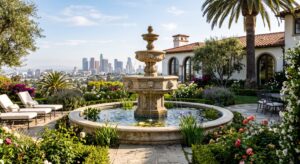
- Elaborate water features. Ponds and large fountains carry maintenance, equipment, and water cost, and in a region conscious of water use they can read as a liability rather than a luxury. Many buyers price in removal.
- Highly personalised design. Themed gardens and unusual materials narrow the buyer pool.
- High-maintenance planting that requires frequent specialist attention.
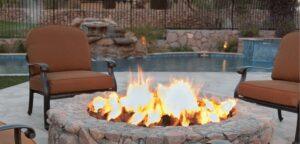
- Overbuilding for the street. Outdoor kitchens, fire features, and structures reward strongly up to the point where the total exceeds what the neighbourhood supports.
None of these is an argument against building something you want. It is an argument for being clear about whether a given project is for enjoyment or for resale, because the two justify different budgets.
Westside and Valley Buyers Want Different Things
Expectations diverge across the county in ways worth designing around.
On the Westside, lots are typically smaller and land is the scarce resource, so efficient use of limited space, privacy from close neighbours, and quality of finish carry disproportionate weight. Coastal planting also has to tolerate salt air, and metalwork and fixings degrade faster within a few miles of the ocean.
In the Valley, lots are generally larger and the constraints are heat and water. Shade, a usable pool surround, and planting that survives extended high temperatures without heavy irrigation matter more than square footage alone. Hillside parcels in either area bring slope, drainage, access, and often fire zone considerations that reshape the whole budget.
A Sensible Order of Work
Sequencing avoids paying twice.
- Drainage and grading first. Everything else sits on top of it, and correcting it later means lifting finished surfaces.
- Structural elements next, including retaining walls and level changes, since they define what is possible above them.
- Utilities before hardscape. Gas, water, and conduit for lighting, an outdoor kitchen, or a fire feature should be trenched before paving goes down rather than cut in afterwards.
- Hardscape and structures, then irrigation and planting.
- Lighting last, once the shapes and levels are settled.
Doing this in reverse is the most common and most expensive mistake in residential outdoor projects.
The Short Version
In Los Angeles, the improvements that hold their value are the ones that make a property genuinely more usable, cheaper to run, easier to insure, or structurally sound. Usable shaded outdoor space, climate-appropriate planting, functioning drainage, compliant fire-safe landscaping in hazard zones, and mature trees all qualify. Decorative additions with ongoing water and maintenance obligations generally do not.
For project types and materials, see landscape construction, front yard remodels, and backyard remodels.