Drought Tolerant Landscaping in West Hollywood
Low water gardens for West Hollywood’s compact lots — California natives, privacy planting, and drip irrigation designed for small, overlooked spaces.
West Hollywood is one of the densest residential pockets in Los Angeles County, and that shapes low water design more than the climate does. Lots are small, houses sit close, and most gardens are overlooked from at least one side. The water question and the privacy question have to be answered by the same planting.
Why Low Water Works Here
LADWP rebate documentation
LA’s turf replacement program pays per square foot converted. We measure, photograph, and document your conversion so your rebate application is approved the first time.
California native expertise
Ceanothus, manzanita, salvia, deer grass, CA poppy, we know what establishes in your soil and sun exposure, and what mature size to plan around. No overplanting that needs ripping out in year three.
Smart drip irrigation included
Every planting zone gets pressure-regulated drip with a WaterSense smart controller. Water use drops 30–50% versus spray heads on a clock timer.
Structure, not just plants
DG paths, steel edging, dry creek beds, and boulder groupings hold the design together while young plants fill in, your yard looks finished on day one, not year two.
We start with hydrozoning and sightlines together — grouping planting by actual water need while using the structural species to screen where screening is wanted. On a small lot every plant has to do two jobs.
How a West Hollywood conversion runs
01Design & Hydrozoning
We map sun, soil, and drainage, then design planting zones by water need. You approve a scaled plan with plant palette, hardscape, and irrigation layout before any work starts.
02Turf Removal & Soil Prep
Sod is cut and hauled off, soil decompacted and amended. We document square footage for your LADWP rebate at this stage.
03Hardscape & Irrigation
DG paths, edging, boulders, and dry creek beds go in first, then drip mains and a smart controller, all before a single plant touches soil.
04Planting & Mulch
Natives and Mediterranean species planted to the plan, topped with three inches of mulch. We hand you a seasonal care sheet, most gardens are rainfall-independent by season two.
Small lot. Less water. More privacy.
“On a small West Hollywood lot, the planting has to screen, soften and survive the summer all at once. That is a design problem before it is a plant problem.”
What goes into a West Hollywood low water garden.
Turf removal & LADWP rebates
Sod cutting, haul-off, and soil preparation, fully documented with measurements and photos for LA’s turf replacement rebate program. We handle the paperwork trail so your application is approved without back-and-forth.
California native planting design
Ceanothus, manzanita, salvia, deer grass, buckwheat, and CA poppy arranged by mature size, bloom season, and water zone. Mediterranean companions, lavender, rosemary, olive, where structure or fragrance is wanted.
Decomposed granite & dry creek beds
Stabilized DG paths and patios, steel or paver edging, and dry creek beds that double as drainage during winter rains. Boulder placement for year-round structure.
Smart drip irrigation
Pressure-regulated drip zones sized by plant water need, run from an EPA WaterSense smart controller that adjusts to weather. Typical savings: 30–50% over spray heads on a timer.
Artificial turf where it makes sense
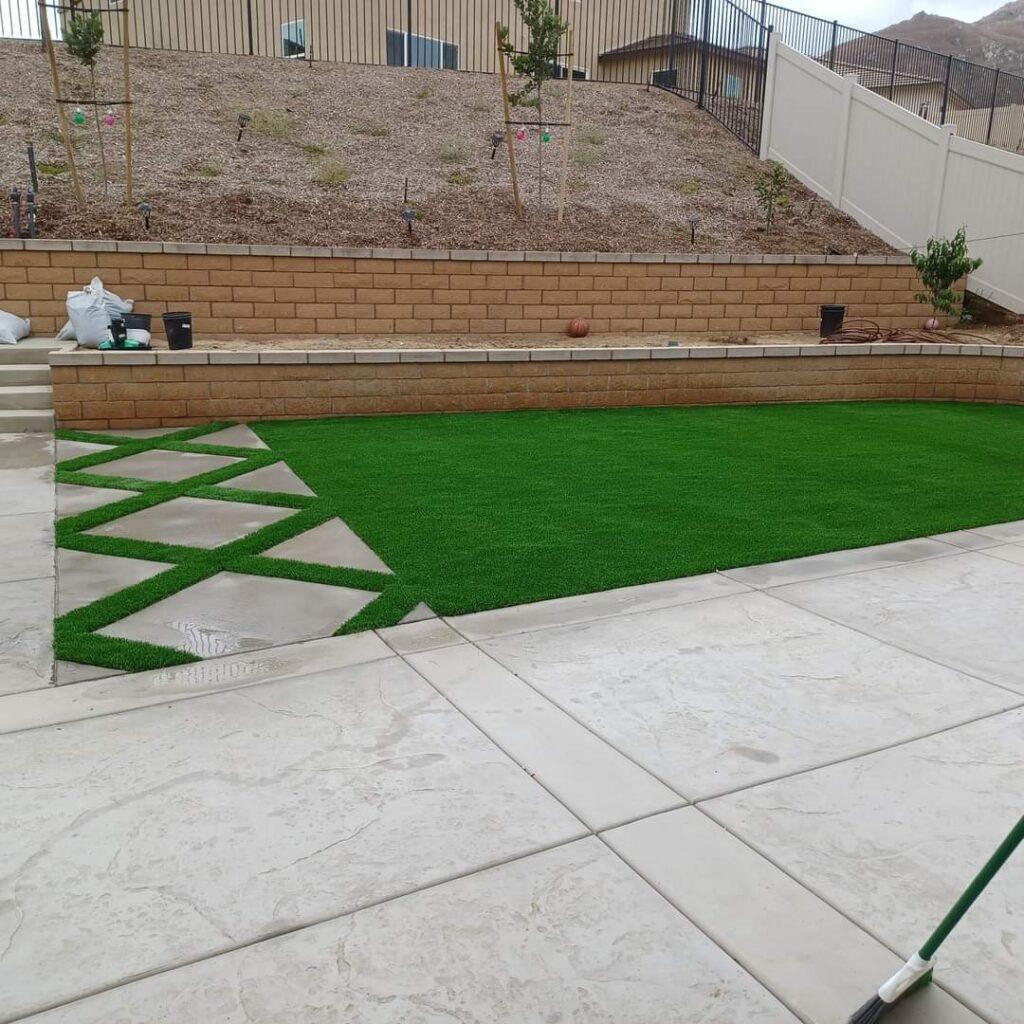
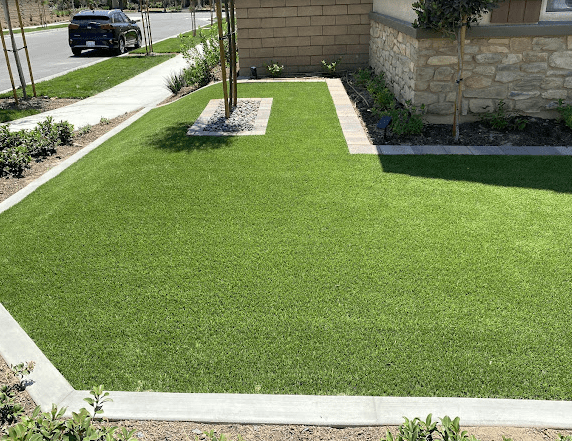
For play areas and dog runs we install commercial-grade artificial turf with proper drainage backing, zero water, no mud, and it counts toward turf-conversion rebate square footage.
West Hollywood Low Water FAQ
Questions West Hollywood Homeowners Ask Us
How do the turf replacement rebates actually work?
Regional turf replacement rebates have been available through wholesale and local water agencies, and two rules catch people out. First, programmes typically require approval before existing grass is removed — applying afterwards usually disqualifies the project entirely. Second, many are designed to fund living, low-water landscapes and either exclude synthetic turf or limit how much of the converted area it may occupy. Terms, amounts and eligibility change, so confirm current conditions with your water provider before anything is torn out. We handle the documentation side once you know what you qualify for.
Does drought tolerant mean gravel and cactus?
No, and that assumption is why so many conversions look bleak. California natives and Mediterranean species give you genuine seasonal change: ceanothus flowering blue in late winter, salvias through spring and summer, manzanita with sculptural bark year round, buckwheat going copper in autumn. The design principle that matters is hydrozoning — grouping plants by actual water need so the thirstier things sit together near the house and the toughest species go to the margins. A garden that looks sparse usually has a spacing and structure problem, not a plant palette problem.
What actually fails in Los Angeles low water gardens?
Three things, in order. Overwatering is the most common — established natives resent summer water at the crown, and irrigation left on a lawn schedule kills them faster than drought would. Second is planting into unamended clay without addressing drainage, since most natives need the water to move away rather than sit. Third is planting at the wrong time: autumn planting lets roots establish through the cool wet months, while a spring or summer install faces its first summer with no root system. We plan installs around that where the schedule allows.
Will I really use less water?
Substantially, but not immediately. New planting needs regular water through its first year or two to establish, and the savings arrive once it is settled in. The bigger structural saving comes from converting spray irrigation to drip, which delivers water to the root zone rather than losing it to evaporation and wind — which matters more inland, where evaporation rates are far higher than near the coast. Watering across the region also runs under day-of-week limits set by each retailer, and a low water garden is far easier to keep healthy within those limits than a lawn.
Is artificial turf a better option than planting?
It depends on exposure and use. Turf makes sense for heavy dog or child traffic where living planting would not survive. But inland it gets genuinely hot underfoot in full sun, it does not qualify for most rebate programmes, and it does nothing for soil, shade or pollinators. Living low water planting costs less to install over large areas, improves with age rather than degrading, and keeps the rebate option open. Often the right answer is both: turf where it earns its place, planting through the rest.
What maintenance does a low water garden need?
Less, not none, and different. Expect seasonal cutting back rather than weekly mowing, topping up mulch every couple of years, occasional irrigation checks, and weeding until the planting closes in and shades the soil. The first two years are the most hands-on; after that most of the work is editing rather than maintaining. A neglected drought tolerant garden looks considerably worse than a neglected lawn, so design quality matters more when planting is sparse. Consultation and 3D design are free.
Less water. More privacy.
From a parkway strip conversion to a full courtyard garden, we design and build low water landscapes for West Hollywood properties. Free consultation and free 3D design.