Most pools in Los Angeles are not new. The region built heavily through the sixties, seventies and eighties, and a great many of those shells are still perfectly sound while everything attached to them — the finish, the tile, the coping, the deck, the equipment — has reached the end of its service life. That is what a pool remodel actually is: keeping the structure and replacing the parts that wear out.
Done at the right moment it is far cheaper than people expect. Left too long, a surface problem becomes a structural one, and the job changes character entirely.
How to Tell When Resurfacing Is Due
Interior finishes are consumable. They do not fail suddenly, and the signs are readable well before anything serious happens.
Roughness and etching. A surface that has gone chalky or abrasive underfoot usually reflects water chemistry that has been aggressive over time — typically low pH or low calcium hardness. Water that is too soft dissolves the finish, which surprises people who assume soft water is gentler.
Staining. Metal staining, often from corroding equipment or well water, shows as grey, brown or greenish patches. Organic staining from leaves and debris is usually brown and more diffuse. Some lifts with treatment; much of it does not.
Hollow or flaking patches. Delamination — where the finish separates from the shell in sheets or sounds hollow when tapped — is a bond failure. It is not a patch repair, and it tends to spread.
Exposed gunite. Once you can see the grey structural shell through the finish, the surface is no longer protecting it. This is the point at which waiting starts costing real money.
Patches that keep coming back. Isolated chips can be repaired, with the caveat that new material rarely colour-matches an aged surface. When you are patching repeatedly, the finish as a whole is done.
Replastering, Quartz or Pebble: What Actually Differs
Three families of interior finish dominate, and the difference between them is mostly service life against cost.
White plaster is the traditional option and the cheapest. It is a cement and marble-dust mix, it gives that classic pale blue water colour, and it has the shortest lifespan of the three. In Los Angeles conditions it is also the most vulnerable to the calcium problems described below.
Quartz finishes add quartz aggregate to the plaster matrix. They are denser, noticeably more stain and etch resistant, hold colour better, and last considerably longer than plain plaster for a moderate premium. For most LA remodels this is the sensible middle.
Pebble finishes use small river pebbles in the matrix. They are the most durable of the three, the most forgiving of imperfect chemistry, and the longest lasting — which is why they dominate resurfacing work in this region. The trade-off is texture: pebble is rougher underfoot than plaster, and the finer polished variants cost more precisely because they soften that.
Colour is worth thinking about beyond taste. Darker interiors absorb more heat, which extends the swimming season slightly, but they also show calcium scale and chemistry problems far more visibly than pale finishes do.
The Calcium Problem Nobody Warns You About
This is the single most Los Angeles-specific factor in a pool remodel, and it catches owners out repeatedly.
Much of the water delivered across the region carries a significant mineral load. Pools concentrate it, because water evaporates and minerals do not — every gallon lost to a hot afternoon leaves its calcium behind. Over several seasons calcium hardness climbs steadily even with otherwise perfect routine chemistry.
On a new finish that shows up as scale: a rough white deposit along the tile line, cloudiness that will not clear, and in advanced cases deposits inside the heater and plumbing. Salt chlorine generator cells scale readily in hard water too.
The practical consequence for a remodel is that putting a fresh finish into water that is already mineral-saturated shortens its life from day one. Water management at startup and afterwards matters as much as the finish you choose, and it is worth discussing before the work rather than after. The ongoing side of this is covered in our pool maintenance and repair guide.
Do the Tile and Coping at the Same Time
Waterline tile and coping are separate from the interior finish, but they share the two expensive prerequisites: draining the pool and getting access. Replacing them later means paying for both again.
Tile usually fails at the grout and the bond rather than the tile itself, and in hard water it is where scale concentrates most visibly. Coping — the cap around the pool edge — takes sun, foot traffic and pool chemistry, and on older pools it is often cantilevered concrete that has cracked or spalled.
Replacing both alongside the interior is the single most effective way to make a remodelled pool look genuinely new rather than merely clean. It is also the moment to reconsider the material: porcelain and natural stone appear far more often around newer LA pools than they did twenty years ago, partly on looks and partly because saltwater systems accelerate efflorescence and surface deposits on concrete products.
The Deck Is Part of the Remodel
A resurfaced pool surrounded by a cracked, settled deck looks half finished, and on Los Angeles ground the deck is usually where the visible damage is.
Much of the basin and the San Fernando Valley sits on clay-heavy soils that swell when wet and shrink through long dry summers. The pool shell does not move with that seasonal cycle; the deck does. The result shows up as separation at the coping joint, cracked slabs adjacent to the pool, and in some cases lifted paving.
The flexible sealant at that coping-to-deck joint is a maintenance item, not a permanent detail. Letting it fail lets water beneath the deck, which accelerates the very movement it was meant to absorb.
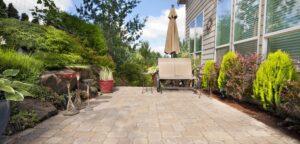
This is also the strongest argument for unit paving over poured concrete around a pool. Pavers accommodate movement and can be lifted and reset where settlement occurs; a cracked concrete deck means replacement. Surface temperature matters inland too — dark concrete and dense dark stone become genuinely unwalkable barefoot in a Woodland Hills or Chatsworth August, while travertine and lighter paver tones stay usable. Material detail is in our guide to paver installation in Los Angeles.
Equipment: The Upgrade That Pays for Itself
A remodel is the natural moment to deal with equipment, because the pool is already down and the pad is already accessible.
The important one is the pump. California regulates pool equipment efficiency more tightly than most states, and appliance efficiency rules have progressively required variable speed operation for residential pool pumps above a modest power threshold. In practice, replacing a failed single-speed pump generally means moving to a variable speed model — single-speed replacements are no longer the default they once were. Requirements have been revised more than once, so confirm current rules before purchasing.
The economics happen to favour it anyway. A single-speed pump runs at full power whenever it runs. A variable speed pump filters at low speed for longer periods and reserves high speed for cleaning and features, and because power consumption falls sharply as speed drops, running longer at lower speed uses substantially less energy.
Beyond the pump: LED lighting replaces incandescent fittings that consume far more and fail more often; automation earns its place mainly by running equipment on sensible schedules; and heating is worth reconsidering, with heat pumps suiting Los Angeles better than most climates because ambient temperatures rarely fall low enough to undermine their efficiency.
The Safety Requirement That Catches People Out
This is the detail most likely to produce an unwelcome surprise, and it is worth knowing before you start.
California requires drowning-prevention measures for residential pools, and the obligation is triggered when a pool is newly constructed or when a permit is pulled to remodel an existing one. The framework requires a specified number of approved features from a defined list: enclosures meeting particular height and gate requirements, approved safety covers, exit alarms on doors providing access to the pool area, self-closing and self-latching devices, and alarms detecting entry into the water.
The practical effect is that a resurfacing or equipment project can bring an older pool into scope for upgrades that were never in the budget. Provisions have been amended over the years, so current requirements should be confirmed with the local building department during planning rather than discovered at inspection.
Separately, main drain covers are subject to anti-entrapment standards. An older pool with a single unprotected main drain is worth assessing on that basis regardless of what else you are doing.
How the Work Actually Runs
A resurfacing project is a sequence with cure and inspection time built in, and the schedule is set by those as much as by labour.
The pool is drained, the old finish chipped or hydro-blasted out, and the shell prepared and checked for structural issues that were hidden underneath. Tile and coping come out if they are being replaced. The new finish is applied, and the pool is refilled immediately — a fresh plaster, quartz or pebble surface should not be left to dry out. Then comes startup: a brush-in and careful chemistry regime over the first days and weeks that has a disproportionate effect on how long the finish lasts.
One caution about draining. It is not a casual step. An empty pool can shift or lift under hydrostatic pressure from groundwater, and plaster surfaces are not designed to sit dry in full sun. On hillside parcels and anywhere with a high water table this needs managing rather than assuming.
What Drives the Cost
- Pool size and shape. Surface area sets material and labour; complex shapes, steps, benches and spas add detail work.
- Finish choice. Plain plaster, quartz and pebble sit at increasing price points and increasing service lives.
- Scope beyond the interior. Tile, coping and decking are each substantial line items, but doing them together shares the drain and access cost.
- Hidden shell repairs. Structural issues are sometimes only visible once the old finish is off, which is why a contingency is sensible on an older pool.
- Access. Narrow side yards, hillside parcels and properties where material moves by hand cost more than an open Valley backyard.
- Equipment and compliance. Pump upgrades, and any drowning-prevention features triggered by the permit.
Remodel or Replace?
Replacement makes sense when the shell itself has failed, when the pool is in the wrong place, or when the shape and depth no longer suit how the household uses it — a deep diving well, for instance, in a family that wants shallow lounging space.
Short of that, remodelling an intact shell is almost always better value. You keep the excavation, the structure and the plumbing runs, which is where a large share of new-build cost sits. Adding a spa, a water feature or a fire element to an existing shell is common, and a resurfaced pool with new tile, coping and deck is genuinely indistinguishable from new to anyone standing beside it. If you are weighing a full rebuild instead, the planning considerations are set out in our guide to planning a custom pool.
Timing It Sensibly
Los Angeles allows this work nearly year round, which is a real local advantage. The practical constraint is winter rain, since saturated ground complicates draining and an empty shell is least happy during storms. Spring is the natural window for equipment servicing and resurfacing before the season begins, which also makes it the busiest period and the point at which lead times stretch. Autumn is often the quieter, easier booking.
If your pool is showing roughness, staining or patches that keep returning, it is worth getting an assessment before the surface fails to the point where the shell is exposed. For project types and services, see pools and spas and backyard remodels.